

Alexandre Dumas, often referred to as Alexandre Dumas père (French for father), was a prolific French writer born on July 24, 1802, in Villers-Cotterêts, France, and died on December 5, 1870, in Puys, France. He is best known for his historical novels, including “The Three Musketeers” (1844) and “The Count of Monte Cristo” (1844).
Dumas’s father was Thomas-Alexandre Dumas, a general in the French Revolutionary Army during the French Revolution. Thomas-Alexandre Dumas was born to a French nobleman and an enslaved African woman in Saint-Domingue (now Haiti). He rose through the ranks of the French military, becoming the highest-ranking person of color of his time in any European army.
Thomas-Alexandre Dumas’s life and career have also been celebrated and fictionalized in various works, though his son, Alexandre Dumas père, achieved greater literary fame and recognition.
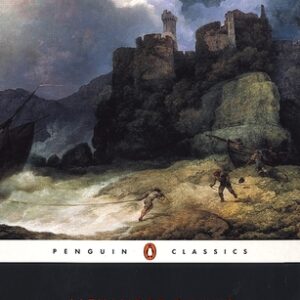
“The Count of Monte Cristo” is a famous novel written by Alexandre Dumas, first published in 1844. It tells the story of Edmond Dantès, a young sailor who is falsely accused of treason and imprisoned in the Chteau d’If, a fortress off the coast of Marseille. During his imprisonment, he learns of a vast hidden treasure on the island of Monte Cristo.
Dantès eventually escapes from prison, finds the treasure, and uses it to transform himself into the wealthy and enigmatic Count of Monte Cristo. Under this new persona, he seeks revenge against those who betrayed him and orchestrated his downfall.
The novel is renowned for its intricate plot, themes of justice and revenge, and memorable characters. It has been adapted into numerous films, television series, and stage plays, cementing its status as a classic of adventure literature.
There isn’t a direct correlation between the character of the Count of Monte Cristo and Alexandre Dumas père’s father, Thomas-Alexandre Dumas. The novel “The Count of Monte Cristo” is primarily a work of fiction, and the character of Edmond Dantès (the Count of Monte Cristo) is not based on Thomas-Alexandre Dumas.
The inspiration for “The Count of Monte Cristo” came from various sources, including historical events, Alexandre Dumas père’s own experiences, and possibly other literary influences. The character of Edmond Dantès is a composite of traits and adventures imagined by Dumas to create a compelling tale of betrayal, revenge, and redemption.
Thomas-Alexandre Dumas, Alexandre Dumas père’s father, was a notable figure in his own right, known for his military prowess and his achievements during the French Revolutionary and Napoleonic Wars. His life story has been celebrated separately from the fictional characters created by his son in his novels.