
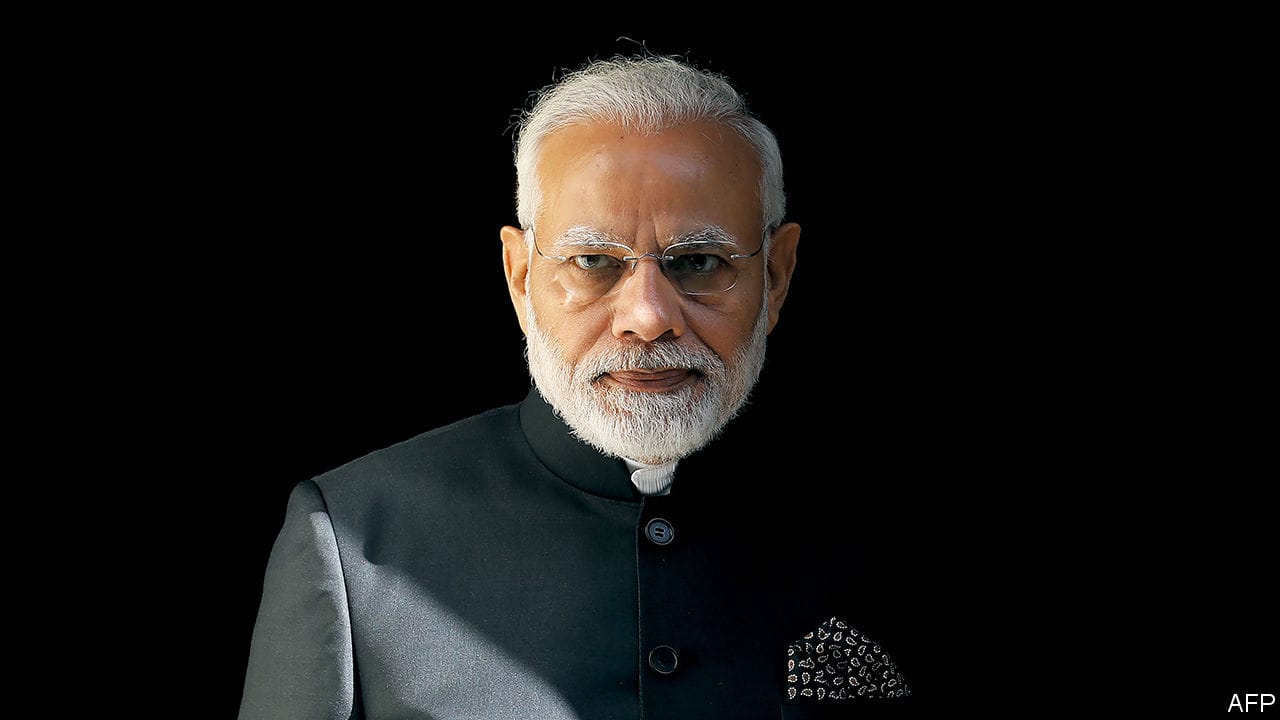

This week looks at the most dangerous confrontation between Pakistan and India since they went to war in 1971. A suicide-bombing in Kashmir, followed by tit-for-tat sorties by Indian and Pakistani warplanes, has left the two nuclear-armed powers on the brink of a catastrophic escalation. In the long run, stability depends on Pakistan ending its indefensible support for terrorism. Its prime minister, Imran Khan, is urging dialogue and, in a placatory gesture, has promised to return a captured Indian pilot. But the responsibility to stop a rush to war also lies with India’s prime minister, Narendra Modi. Because he faces an election in April, he faces the hardest and most consequential calculations. They could come to define his premiership.
text culled from the economist

THE ARMIES of India and Pakistan often exchange fire across the front line in the disputed state of Kashmir. When tensions rise, one side will subject the other to a blistering artillery barrage. On occasion, the two have sent soldiers on forays into one another’s territory. But since the feuding neighbours tested nuclear weapons in the late 1990s, neither had dared send fighter jets across the frontier—until this week. After a terrorist group based in Pakistan launched an attack in the Indian-controlled part of Kashmir that killed 40 soldiers, India responded by bombing what it said was a terrorist training camp in the Pakistani state of Khyber Pakhtunkhwa. Pakistan retaliated by sending jets of its own to bomb Indian targets. In the ensuing air battle, both sides claim to have shot down the other’s aircraft, and Pakistan captured an Indian pilot.
A miscalculation now could spell calamity. The fighting is already the fiercest between the two countries since India battled to expel Pakistani intruders from high in the Himalayas in 1999. The initial Indian air raid struck not Pakistan’s bit of Kashmir, but well within Pakistan proper and just 100km from the capital, Islamabad. That, in effect, constituted a change in the rules of engagement between the two (see article). India and Pakistan are so often at odds that there is a tendency to shrug off their spats, but not since their most recent, full-blown war in 1971 has the risk of escalation been so high.